What Is a Realistic Rolex Loan Amount for a $10,000 Cash Need?
If you need $10,000 to cover a production deposit, a slow-paying client, or a gap between gigs, a Rolex may help you borrow against an asset instead of selling it. But the watch’s retail price—or even its resale asking price—is not the amount a lender will typically advance.
The practical question is what the watch could sell for through a wholesale or dealer channel, how confidently it can be authenticated, and what portion of that value a lender is willing to lend. For a quick planning estimate, a 30% structure means borrowing about 30% of the watch’s estimated liquid wholesale value. Under that assumption, a $10,000 loan generally calls for a Rolex with roughly $33,300 in liquid wholesale value. A lender using a 40% structure might require about $25,000 instead.
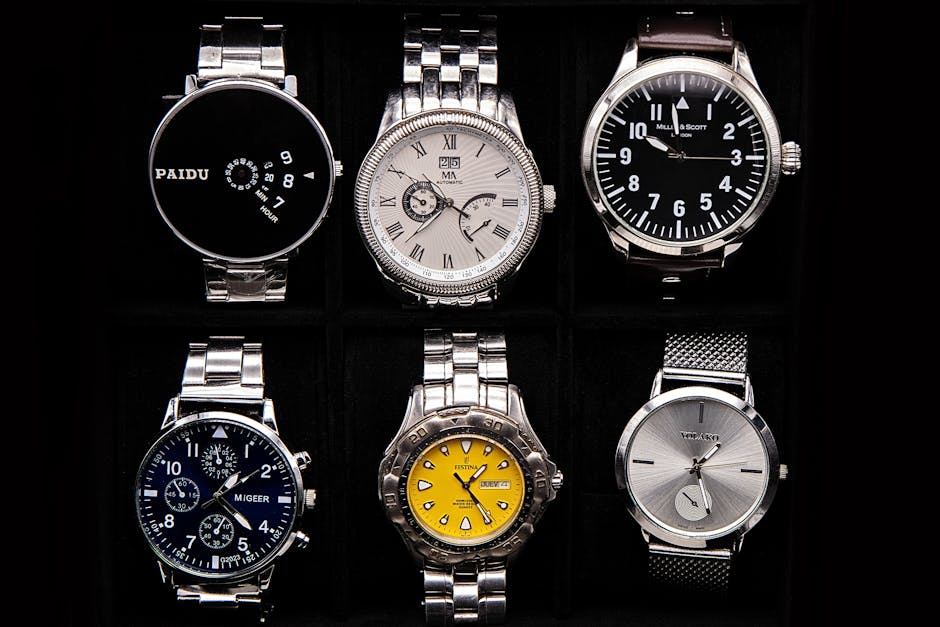
Those are planning figures, not offers. Actual loan amounts, rates, fees, and repayment terms vary by lender, model, condition, documentation, and the rules of the specific loan. Here’s a step-by-step playbook for estimating what may be realistic before you hand over your watch.
Step 1: Separate the watch’s price from its borrowing value
Rolex prices are often discussed as if there were one number. In practice, there may be several: the original retail price, the current dealer asking price, a recent private-sale price, and the amount a buyer or dealer might pay to acquire the watch promptly. A lender is more interested in the last category than in an optimistic online listing.
That more conservative figure is the watch’s liquid wholesale value: an estimate of what the watch could reasonably bring in a trade or wholesale sale, given its model, condition, completeness, and current demand. “Liquid” matters because some Rolex https://thelosangelestribune.com/2026/09/28/irregular-income-luxury-assets-a-liquidity-playbook-for-l-a-s-creative-professionals/ references are easier to move than others. A popular steel sports model may attract more buyers than a less in-demand configuration, but popularity does not guarantee any particular loan amount.
For example, a dealer listing a watch at $30,000 is not proof that a lender values it at $30,000. The listing may include a retail margin, and it may take time to find a buyer. A lender may use a lower valuation to leave room for resale costs and changes in the market if the loan is not repaid.
Step 2: Use the 30% structure as a first-pass estimate
A 30% structure is a simple way to run the numbers: multiply the lender’s estimated liquid wholesale value by 0.30. It is not a universal industry standard or a promise that every lender will advance exactly 30%. Think of it as a conservative planning scenario, then ask the lender to explain its own advance rate and valuation method.
Estimated liquid wholesale value Illustrative loan at 30% Illustrative loan at 40% $20,000 $6,000 $8,000 $25,000 $7,500 $10,000 $33,300 About $10,000 About $13,320 $40,000 $12,000 $16,000Using the 30% estimate, a $10,000 cash need points to a watch with approximately $33,300 in liquid wholesale value. The calculation is straightforward: $10,000 divided by 0.30 equals about $33,333. If the lender’s advance rate is 25%, the watch would need about $40,000 in liquid wholesale value. If it is 40%, the rough threshold would be $25,000.
That difference is why it is worth requesting a written estimate before making plans around the money. Ask whether the amount shown is the gross loan or the amount you would actually receive after fees, storage costs, or other deductions.
Step 3: Treat market movement as context, not a guarantee
Rolex is often described as a liquid luxury asset because there is an established resale market, recognizable models, and buyers who know the brand. That liquidity can make some watches more workable as collateral than an unusual collectible with a small audience. But “liquid” does not mean cash-equivalent, risk-free, or certain to hold its value.
For context, Rolex secondary-market prices rising 1.7% in Q1 2026 would be a modest positive market signal. It would not mean every Rolex rose by 1.7%, nor would it automatically increase a particular borrower’s loan offer by that amount. Results differ by reference, condition, set completeness, and where a sale takes place. A lender may also use its own pricing data and a margin of safety rather than immediately passing along a short-term market move.
Look for providers that can explain their global secondary market pricing visibility—in plain language, how they compare the watch with transactions and demand across relevant markets. Pricing visibility is useful, but it does not replace a watch-specific appraisal. The number that matters to you is the lender’s current offer for your actual watch, not a broad market headline.
Step 4: Understand why a lender may care more about the Rolex than your next invoice
Many banks are set up to assess a borrower through recurring income, credit history, debt obligations, and documentation. That can be a poor fit for people whose work comes in waves. A Los Angeles commercial director might invoice after a shoot, wait 30 or 60 days for payment, then have several strong weeks followed by a quiet month. A musician may receive a tour deposit well before the final settlement. A freelance stylist may have several clients pay on different schedules.
Those earnings can be real and substantial, but they do not always appear as a steady paycheck on a predictable date. Banks often prefer predictable income because it is easier to assess whether regular payments are likely to arrive. That preference does not mean a creative has no capacity to repay; it means the application may require more explanation, documentation, or patience than a W-2 borrower’s file.
Asset-backed lending approaches the question from another direction. Instead of relying only on future income, the lender considers an asset it can hold as collateral. That can be helpful when a client’s payment is late but expected, or when a short-term cash need arrives between projects. The collateral is not a substitute for a repayment plan, however. If you fail to meet the agreement, you may lose the watch.
This is different from a general wealth-management relationship at a firm such as Morgan Stanley, where borrowing options may be connected to a broader financial picture and eligible assets. A Rolex-collateral loan is a specific transaction secured by a physical watch. Don’t assume that a bank, brokerage, or luxury-asset lender uses the same underwriting rules or offers the same protections.
Step 5: Get the watch evaluated before counting on the money
A lender’s authentication and valuation process can affect both the amount and the timing. The provider may inspect the case, dial, movement, bracelet, serial information, condition, and any accompanying papers or box. Completeness can help with resale confidence, but missing accessories do not automatically make a watch ineligible. The specific model and its condition matter.
Ask in advance whether the evaluation is in person or remote, how long it usually takes, what happens if the watch cannot be authenticated, and when funds are released after approval. If you’re in Los Angeles, clarify whether you need to visit a location or arrange insured shipping. A meeting near N. Camden Drive in Beverly Hills may be convenient for some clients, but location alone says nothing about the quality of an offer or the contract.
Before you submit the watch, photograph it and note the reference and serial information you can safely provide. Don’t publish sensitive identifying details online. Bring purchase records and service documents if available, and ask how the watch will be stored and insured while it is in the lender’s possession.
Step 6: Compare the cash you receive with the full cost
A $10,000 loan is not necessarily $10,000 in usable cash if fees are taken out before disbursement. Compare offers on the same basis: amount advanced, net proceeds, interest rate, fees, repayment schedule, extension or renewal costs, and the consequences of missing a payment or reaching maturity without repaying.

- Ask what you will receive: Confirm the net cash after any upfront charges.
- Get the timeline in writing: Approval, authentication, funding, and repayment dates all matter when a client check may arrive late.
- Understand the end date: Find out what happens if you need more time and what an extension would cost.
- Check the default terms: Understand when the lender can sell the watch and whether you may owe anything beyond the collateral.
- Compare at least two offers: Use the same watch details and ask each provider to explain its valuation.
Do not compare a collateral loan only with a credit-card limit. A high-interest credit card can become an expensive default when a payment is late and the balance rolls over. But a watch loan has its own costs and risk: you are putting a personal asset on the line. Compare the total dollars you would pay, the repayment date, and the outcome if a client delays payment again.
A quick playbook for a $10,000 need
- Set a repayment source and date. Identify the invoice, contract payment, or other cash flow expected to repay the loan. Build in room for a delay rather than assuming the client pays on the promised date.
- Estimate value conservatively. Use a likely wholesale figure, not the highest retail listing you find online.
- Run more than one structure. At 30%, you may need about $33,300 in liquid wholesale value for a $10,000 gross loan; at 25%, about $40,000. Confirm the provider’s actual terms.
- Request the complete offer. Get the advance amount, net proceeds, fees, interest, maturity date, and default provisions in writing.
- Make the decision against your downside. If repayment depends on one uncertain gig or a client with a history of paying late, decide whether the risk of losing the Rolex is acceptable.
Bottom line
For a $10,000 cash need, a Rolex loan may be realistic if the watch’s lender-assessed liquid wholesale value is high enough and the contract fits your repayment timeline. Under a 30% planning structure, the rough target is about $33,300 in wholesale value; a lower advance rate pushes that requirement higher. The final number depends on the actual watch and the lender’s terms.
Use market information—including any reported change such as Rolex secondary-market prices rising 1.7% in Q1 2026—as context, not a promise. Ask how the provider uses global secondary market pricing visibility and what its authentication and valuation process involves. The Los Angeles Tribune can cover the business reality of creative work; the decision in front of you is more concrete: how much cash will arrive, by when, at what total cost, and what happens to your watch if the next check shows up late.